«- He fell off the fence, and then hit someone in the restaurant… And a few more people… – Well, well, well, – said the doctor, turning to Ivan and adding: – Hello! – Hi, troublemaker! – Ivan angrily and loudly replied. Ryukhin (accompanying Ivan to the psychiatric hospital) was so embarrassed that he didn’t dare to look up at the polite doctor. But he did not take offense at all, and with his usual deft gesture, he took off his glasses, lifted the hem of his coat, and tucked them into the back pocket of his pants».
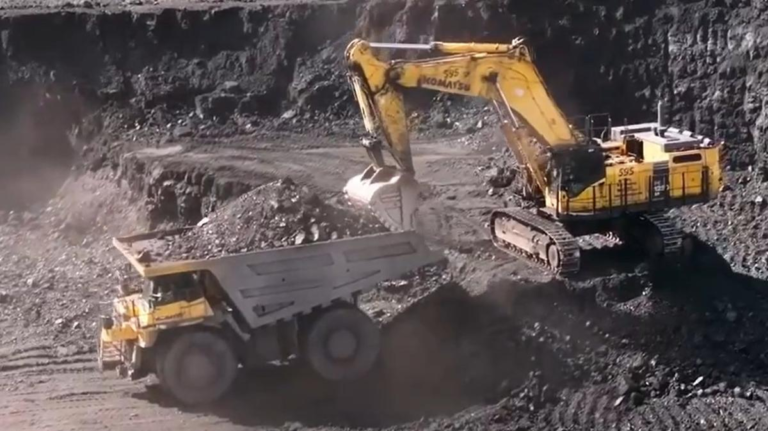
Construction of the Uralmash plant in Sverdlovsk. Photo: TASS Reproduction.
“With madness, but also with joy…” Who are these troublemakers? And why does the suspect of schizophrenia from “The Master and Margarita” call the polite doctor this, and the doctor doesn’t take offense? In November-December 1930, the regional OGPU representation conducted a series of arrests at the Nizhny Novgorod telephone plant (formerly Siemens and Halske). The arrested leaders and leading engineers were accused of intending “to force the Soviet government to make a decision to transfer industrial enterprises, including the Nizhny Novgorod plant, to private entrepreneurs by delaying the development of the plant, systematically disrupting production programs, and discrediting Soviet management methods”. The OGPU iron broom swept through the Prioksky city district. The director of the Kulebak plant N. Manuylov, Chief Engineer A. Belov, Head of the Steel Foundry Workshop K. Tulonen, Head of the Bandaging Workshop V. Kulandin, Chief Engineer of the Vyksun plant I. Domazhirov, Chief of the Railway S. Blagoveshchensky… The real nest of troublemakers turned out to be the Krasnoye Sormovo plant. Experienced engineers were arrested: Appak, Bobrishev, Kotov, Letchford, Matovkin, Neymayer, Skvortsov, Trinkler… The investigation claimed that they were part of the Sormovo network of the Industrial Party, subordinated to the “subversive center” led by Ramzin, Khrennikov, and Meshchersky, and followed the instructions of the French general staff and Prime Minister Poincaré. Gorky, whose name had already been given to the city and region, wrote to his acquaintance Khalatov: “I read about the troublemakers with madness, but also with joy. When will this rotten scum be finally eliminated and destroyed? And the OGPU truly deserves an order…” And further: “Class hatred must be cultivated on an organic aversion to enemies as beings of the lowest type. I am fully convinced that enemies are truly beings of the lowest type, that they are degenerates, degenerated physically and morally.” What can you say about that? A humanist…
On June 26, 1930, the XVI Congress of the Party opened. It was a large event, attended by 2,159 delegates, including 1,268 with voting rights. At the congress, Stalin declared that “people who talk about the need to slow down the pace of our industrial development are enemies of socialism, agents of our class enemies. (Applause).” Just before the congress, the Stalingrad Tractor Plant, hastily completed during the harsh winter, released its first tractor. On June 18, a congratulatory telegram from Stalin was published in Pravda, thanking “our technical teachers, American specialists, and technicians” and predicting that the 50 thousand tractors planned for production at the plant were “50 thousand shells exploding the old bourgeois world and paving the way for the new socialist order in the countryside.”
Lazar Kaganovich and Joseph Stalin. Photo: Archive.
It was the first plant in the USSR with an assembly line, but by that time it had only 60% of the necessary equipment installed. Instead of the planned two thousand tractors, the plant assembled only 43 units (!) in the third quarter of 1930 (July-September), and those, as noted by an American engineer working at the plant, “started falling apart after 70 hours of work.” Soviet steel was of appalling quality, copper strips for radiators arrived so scratched that they couldn’t be used, thousands of workers on the assembly line held bolts and nuts in their hands for the first time in their lives. It turned out that mastering Ford’s conveyor methods required time. However, “fighting the troublemakers” became a universal explanation for any failures. Although, it seemed that Soviet statistics coped with any setbacks themselves.
On September 30, 1930, the head of the Economic Department of the OGPU and member of the Presidium of the VSNKh Prokofiev (shot in 1937; not rehabilitated) approved the “Indictment Conclusion on the case of a counterrevolutionary espionage-sabotage organization in the oil industry of the USSR,” which was assembled from “fragmented” regional cases. Half a year later, the OGPU Collegium considered it extrajudicially. A total of 77 people were held accountable in this case, 22 of them were associated with the Nobel corporation. 29 people were sentenced to death by firing squad. One committed suicide during the investigation, three received sentences in related cases. The execution was confirmed only for seven individuals (the fate of two more is unknown), and the remaining twenty “pre-executed” were replaced with ten years of labor camps as a “good will gesture.”
Shtrizhov. Photo: Archive.
What was their guilt? A prominent “troublemaker”-oilman, Shtrizhov, wrote in 1926: “Everything must develop coordinately. It’s not right to drill without improving other aspects of the oil business. What’s the point if we drill a few extra tens of thousands of meters but can’t process this oil rationally and release a lot of gas containing gasoline into the air? Instead of the extensive development of the oil industry in Grozny and Baku, I believe it is necessary to move towards its intensive development. Existing resources need to be put in order, rationalized and then expanded.” Retribution came faster than expected: in the “victorious” 1931, the oil industry failed to meet the plan. And in 1932, oil production decreased in absolute terms. With some adjustments to the number of convicted oilmen, linked to incomplete data on the number of cases initiated during this period, it can be assumed that the number of repressed individuals in the oil industry in 1929-1930 amounted to one-tenth of the existing engineer workforce.
Axes and wrenches ended up in marriage. Senior Researcher at the Institute of History and Archaeology of the Ural Branch of the Russian Academy of Sciences, Candidate of Historical Sciences A. Sushkov from Yekaterinburg wrote a book called “The Empire of Comrade Kabakov. The Ural Party Nomenclature in the 1930s” and published it in a print run of as many as 500 copies. I must admit, it significantly corrected my views on industrialization, preserved since high school, and, more broadly, life in the 1930s. The main idea of the book is not close to me. According to the author, if I understand correctly, the local nomenclature completely broke away from the hands, disbanded, ignored direct orders from Comrade Stalin (he continuously called for party modesty, even talked about it from the podium at congresses), became entirely corrupt, grasping everything in the hungry country… In general, the year 1937 was justified by the author through this lens. But, God, what documents were “found” by Candidate of Historical Sciences Sushkov! What evidence he provides! What facts! What a gallery of the party nomenclature comes to light! Energetic semi-educated people, fervent plunderers, ruthless sybarites and narcissists – the team of the first secretary Kabakov, tightly united around their favorite task. On the other hand, where else could others be found? According to Sushkov’s book, one desperate knight was found for the entire region, an idealist, a party control agent of Papede, but even he was quickly eliminated, denounced, and expelled. Now I would be interested in reading about his fate. He was executed in Smolensk… And there is no reason to assume that it was any different in other regional committees. People’s Commissar Orjonikidze, after visiting the Uralmash plant construction, decided to speed up its commissioning. Contrary to the opinions of Soviet and foreign specialists, he ordered the equipment to be installed in the under-construction workshops simultaneously with the construction of the buildings themselves. This significantly accelerated the deployment of the primary production units. However, auxiliary units were left behind. Expensive equipment, precise imported machines, unique German presses, installed in unfinished workshops, aged from dust, wind, rain, and snow. Valuable measuring instruments left in the open deteriorated and became unusable. The construction of the Novotagilsk Metallurgical Plant started in 1931. Over the following 6 years, the Presidium of the VSNKh USSR and the People’s Commissariat of Heavy Industry changed the project specifications four times: increasing or decreasing the number of blast furnaces and converter furnaces, changing the equipment list of the rolling mill. As a result, over 12 million rubles worth of drawings and projects were voided, and the blast and rolling equipment produced for the NTMZ at the Uralmash plant for almost 900 thousand rubles had to be scrapped. The marriage rate in the Griffin wheels shop at the wagon factory in Nizhny Tagil for the second half of 1934 was 99.4% (only 100 wheels out of 17,000 cast were deemed usable). Hundreds of tons of defective goods were reliably manufactured at the Uralmash plant. The same fate befell the copper-electrolyte plant in Verkhnyaya Pyshma, where the defect rate reached 60%, and the Verkhny-Iset metallurgical plant in Sverdlovsk. At the VIZ plant, specializing in the production of dynamo and transformer steel, metal was processed for several years at a lower temperature than required, significantly speeding up the process and allowing many workers to become leaders. But… “For March, 343 tons of external flaw defects and 200 tons of failure to